Reviews
Source-verified AI tool reviews grounded in official evidence, community feedback, and independent analysis.
Reviews collects source-backed ToolVerse Insights articles for readers who want concise context before comparing AI tools in the directory.
Workflow design, tool permissions, observability, and MCP integration patterns for maintainable agents.
5 articles RAG, retrieval & evaluationRAG quality, retrieval architecture, hybrid search, reranking, and monitoring for document AI systems.
4 articles Coding agents & developer workflowsEvaluation, sandboxing, code review, security, and adoption practices for AI coding agents.
1 articles AI productivity & business operationsSupport, sales, meetings, spreadsheets, and everyday operational AI workflows for teams.
6 articles Creative, multimodal & document AICreative production, multimodal QA, document extraction, video AI, and brand-safe asset workflows.
5 articles AI governance, procurement & securityGovernance, procurement, vendor review, data retention, and risk controls for AI tool adoption.

AutoGen Review: Architecture, Operations, and Fit
A source-verified AutoGen review covering AgentChat, Core, Studio, extensions, migration risk, execution controls, and production ownership.

Cursor Review for Production Coding Workflows
A source-verified Cursor review covering editor agents, cloud agents, privacy controls, pricing, repository governance, and review ownership.

Khoj Review for Private Knowledge Workflows
A source-verified Khoj review covering private search, document sync, agents, cloud and self-hosting, local models, permissions, and operations.

LangSmith Review for Observability and Evaluation
A source-verified LangSmith review covering tracing, datasets, offline and online evaluation, deployment options, privacy, pricing, and lock-in.

LightRAG Review for Graph-Based Retrieval
A source-verified LightRAG review covering graph extraction, retrieval modes, storage backends, multimodal ingestion, evaluation, and operations.

PPT Master Review for Editable AI Presentations
A source-verified PPT Master review covering native editable PPTX, templates, SVG conversion, charts, animation, setup, model cost, and handoff QA.

DocStrange review: PDF to structured data workflows
DocStrange is worth evaluating when a team wants a concise path from documents to editable Markdown, JSON, CSV, HTML, or text and accepts responsibility for validating every important structure. Its open repository and hosted option create useful flexibility, but neither proves fidelity for complex tables, formulas, handwriting, schemas, privacy requirements, or downstream decisions.

MoneyPrinterTurbo review: automated short video
MoneyPrinterTurbo can help an engineering team inspect and assemble an automated short-video pipeline, but it does not turn publishing into passive income or transfer editorial responsibility. Operators still own provider credentials, factual review, voice and media rights, disclosure, platform policy, rendering, repetitive-output risk, account safety, maintenance, and the decision to publish each asset.

OpenDataLoader PDF review: complex document parsing
OpenDataLoader PDF is a credible shortlist candidate for teams that want an inspectable, self-hosted PDF parsing layer and can validate reading order, tables, scans, and output stability on representative files. It is not evidence of universal extraction accuracy: adopters still own OCR choices, regression tests, infrastructure, exceptions, upgrades, and human review.

Presenton review: self-hosted AI presentations
Presenton is a plausible candidate for teams that value an open, self-hosted presentation workflow and editable exports, provided they can own model access, templates, fonts, assets, storage, upgrades, and slide QA. It should be evaluated as a draft-production system, not as proof that generated decks meet brand, chart, accessibility, collaboration, or cross-application fidelity requirements.

Unstructured review: production document pipelines
Unstructured belongs on a production document-pipeline shortlist when a team needs broad format support, configurable partitioning, connectors, and a choice between open-source and managed paths. The decision is operational rather than cosmetic: teams must validate strategy selection, dependencies, OCR, tables, metadata, hosted data boundaries, upgrades, throughput, exceptions, and review effort on their corpus.

Semantic Kernel review: enterprise agent foundations and transition risk
Semantic Kernel has strong enterprise integration roots, but current selection must account for Microsoft's successor framework and the migration path it creates.

OpenAI Agents SDK review: control boundaries for production workflows
The Agents SDK offers a compact orchestration surface, but successful production use depends on application-owned permissions, state, evaluation, and trace governance.

Browser Use review: production controls for web agents
Browser Use makes browser control available to AI workflows, but the production decision turns on credential boundaries, action gates, recovery evidence, and named ownership.

Helicone review: request observability and gateway controls
Helicone puts request-level observability and gateway controls close to model traffic, but a responsible team still needs trace-to-evaluation workflows, data rules, and operational ownership.

LiteLLM review: enterprise gateway routing and ownership
LiteLLM can unify provider access and apply gateway controls, but a team still owns the provider contracts, credentials, policies, operations, and business outcomes.

Aider review: git-native AI pair programming for repository work
Aider offers a documented terminal-centered, Git-aware editing workflow with repository maps and model choice, but repository-scale usefulness and safety still depend on task boundaries, independent checks, and a human owner.

Haystack review: explicit pipelines for production RAG work
Haystack gives Python teams a documented component-and-pipeline model for retrieval applications, but production quality still depends on corpus governance, evaluation, infrastructure, and owners beyond the framework.

LangGraph review: durable orchestration for production agents
LangGraph gives teams explicit graph state, persistence, and interruption patterns, but it shifts workflow design, checkpoint safety, and recovery discipline back to the application owner.

Promptfoo review: evaluation and red-team evidence for AI systems
Promptfoo makes evaluation cases and adversarial probes easier to keep beside application code, but a useful result still depends on a representative dataset, defensible scoring, and a human-owned release decision.

PydanticAI review: typed Python agents for production services
PydanticAI brings typed Python models to agent inputs, dependencies, tools, and outputs, but production services still need explicit persistence, authorization, evaluation, and deployment ownership.

AgentScope vs LangSmith vs AgentOps for agent observability
The three names overlap in observability, but they are not equivalent products: one is an agent framework with Studio, one is a broader managed platform, and one centers an agent-monitoring SDK and service.

AnythingLLM review for private document assistants: fit and limits
AnythingLLM packages document retrieval, model choice, workspaces, and agents into a local-first assistant. The deployment and provider path determine how private it really is.

Claude-Mem review: privacy, context quality, and alternatives
Claude-Mem addresses repeated context loss with automatic capture and recall, but durable coding memory creates a data, trust, and maintenance boundary teams must audit.
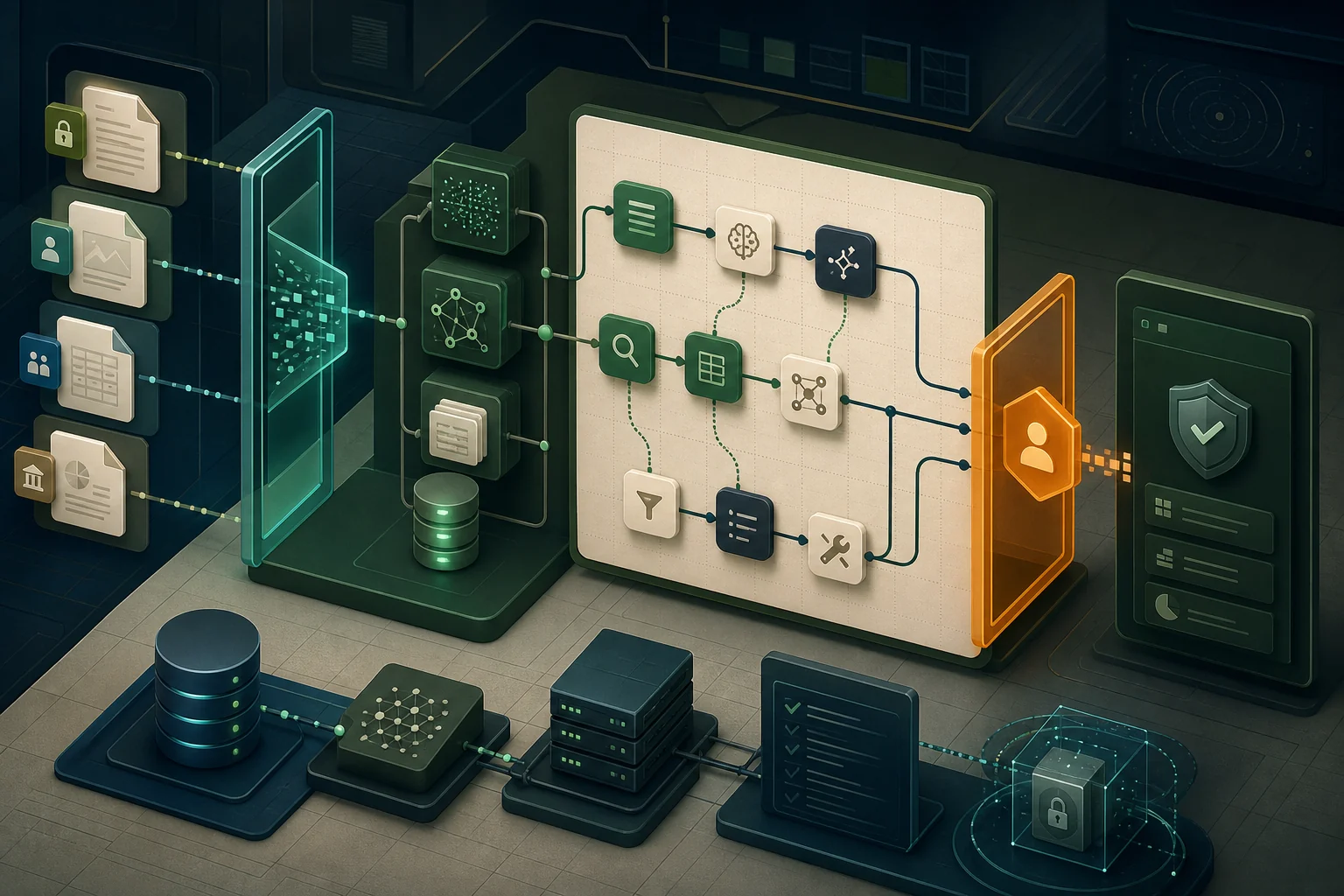
Dify review: enterprise RAG workflows, self-hosting, and cost
Dify packages visual workflows, knowledge pipelines, publishing, and monitoring into one platform, but enterprise fit depends on retrieval evidence and ownership.
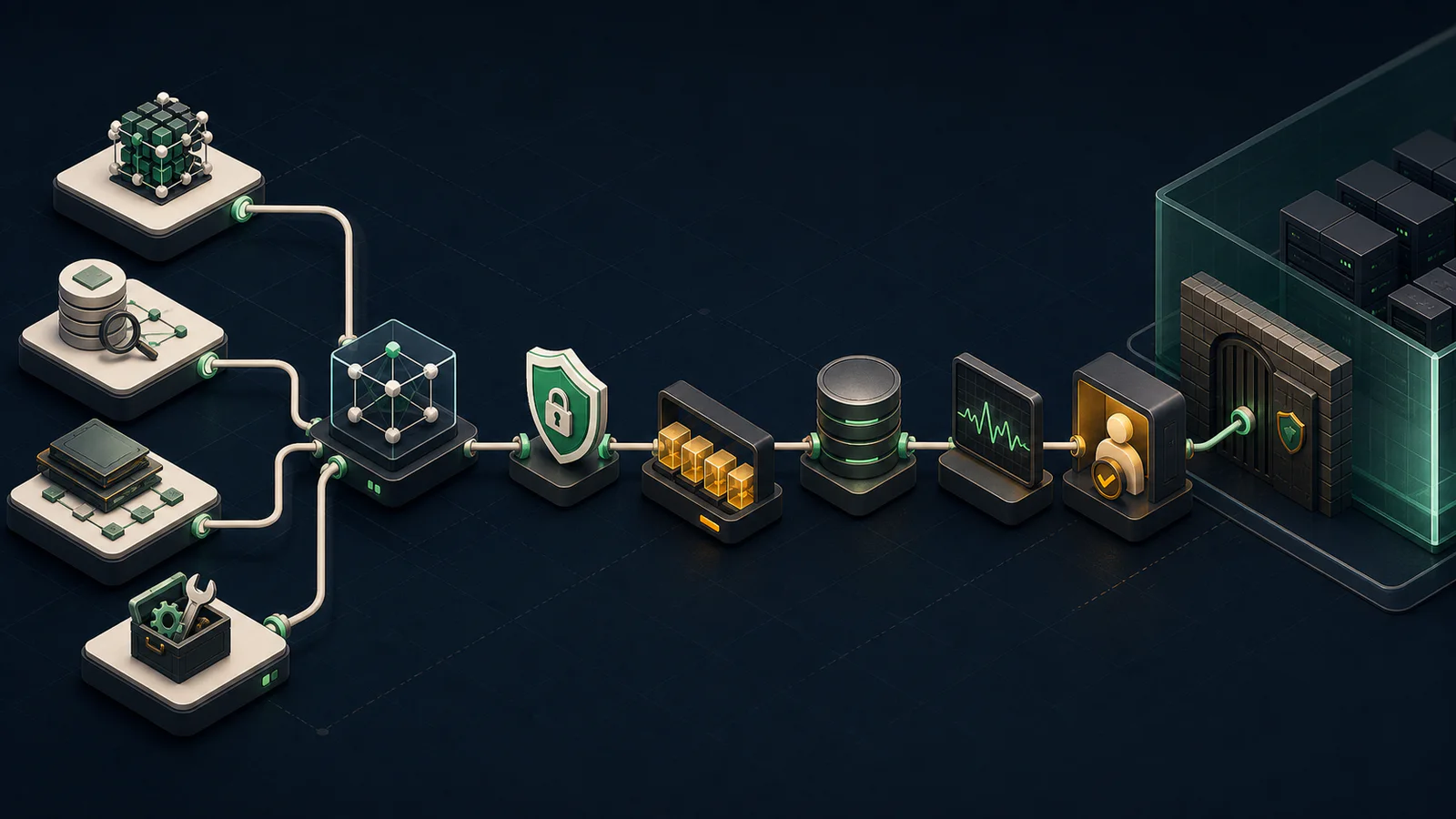
Flowise review: self-hosted AI workflows, security, and cost
Flowise is winding down: existing operators now need a migration or maintained-fork plan, while new adopters should choose an actively maintained alternative.

Langfuse review: self-hosted tracing, privacy, and true ownership
Langfuse combines tracing, evaluation, prompt management, and self-hosting, but the decisive question is whether your team wants to own the observability data plane.

Letta vs Mem0 for agent memory: architecture, privacy, and cost
Letta makes memory part of a stateful agent runtime; Mem0 supplies a memory layer that an existing application can call. The right choice starts with that boundary.

LibreChat vs Open WebUI: governance comparison
Both projects can provide a capable self-hosted AI workspace, but governance depends on the exact deployment, identity path, extensions, model providers, and operating controls—not the word self-hosted.

OpenHands review: repository tasks, sandbox boundaries, and cost
OpenHands can take on bounded repository work through a capable agent runtime, but adoption depends on task evidence, sandbox choices, credential scope, and review ownership.

RAGFlow review: document fit, limitations, cost, and alternatives
RAGFlow offers an integrated document-centered RAG platform, but its value depends on representative parsing quality and a team's willingness to operate a substantial service stack.